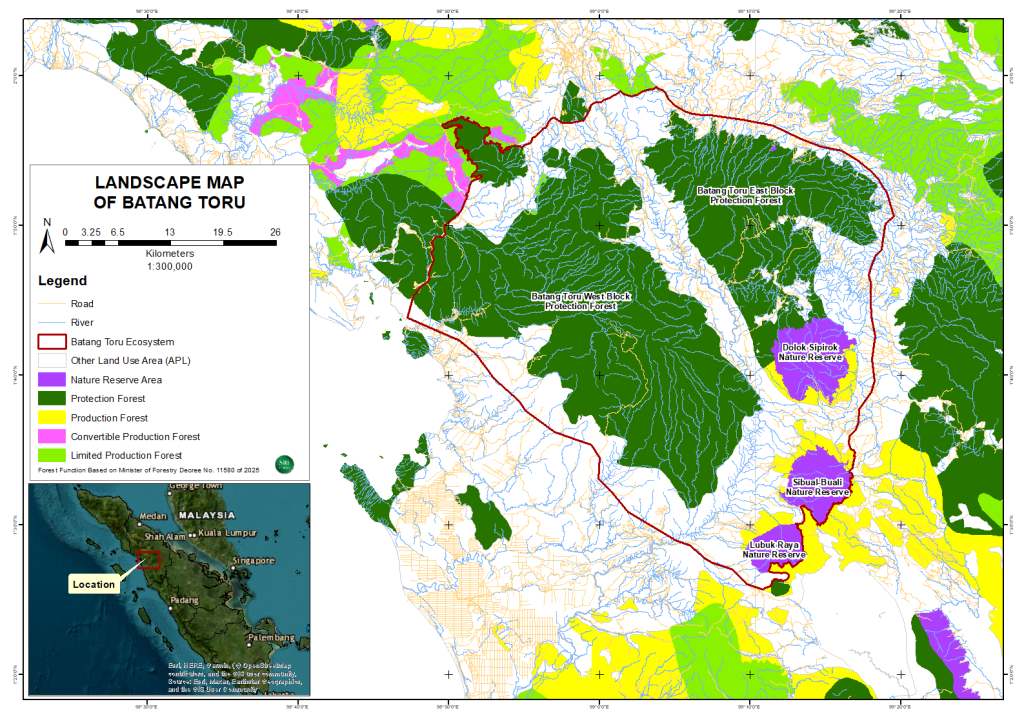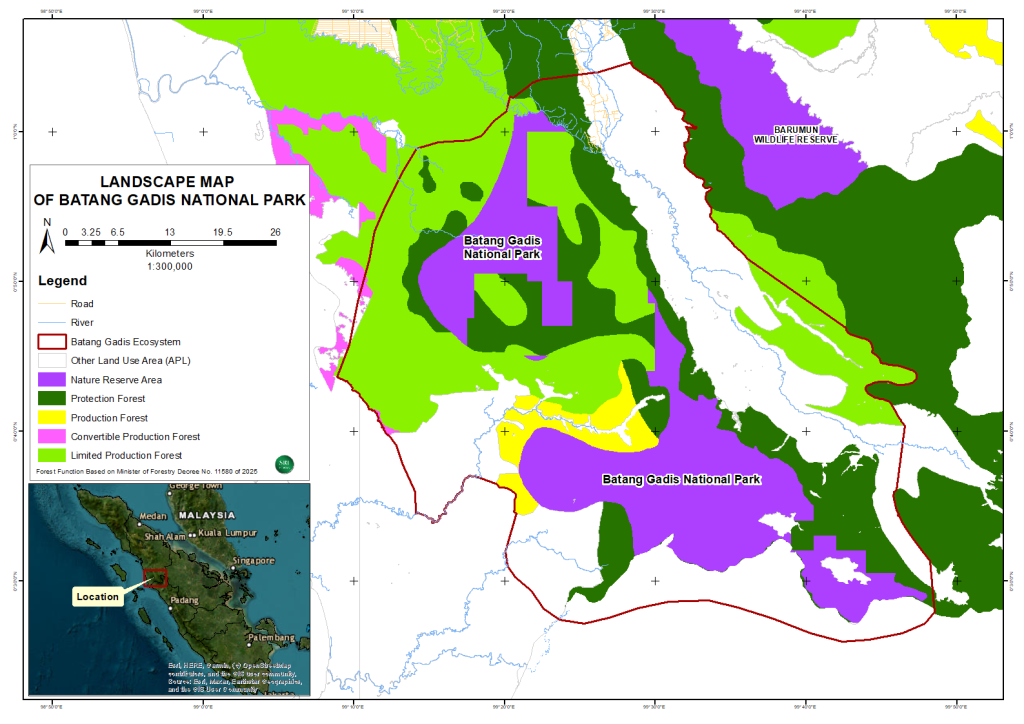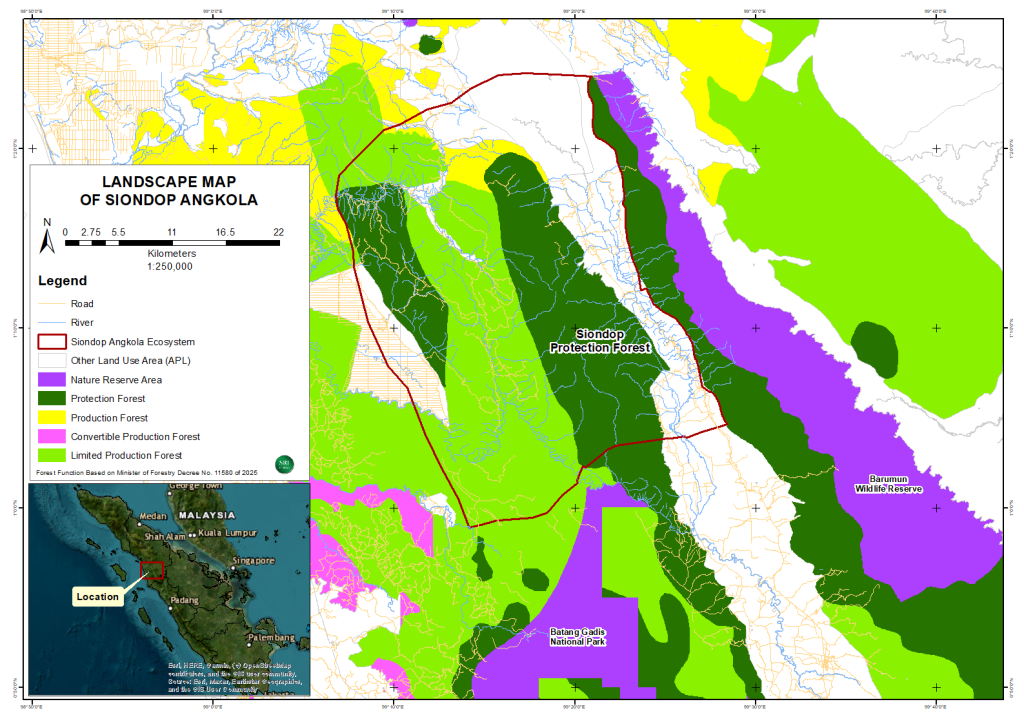
WHERE WE WORK
What is the landscape-based rainforest conservation concept?
Landscape-based rainforest conservation is an environmental management approach that views and cares for forest areas not as isolated regions, but as part of a wider ecosystem and geographical unit that integrates protected areas, community lands, and production zones
Why Use a Landscape-Based Approach?
This approach is chosen because conventional forest management (merely fencing off core areas without regard for their surroundings) frequently fails. Here are the main reasons:
Wildlife and Natural Connectivity: Wildlife such as the Tapanuli orangutan and Sumatran tiger do not recognize administrative boundaries or national park fences. They need green corridors connecting one forest to another to forage, maintain territories, and breed.
Impacts from Outside the Forest (Edge Effects): Damage or land-use changes outside forest areas—such as nearby plantation clearing or mining—can degrade internal forest ecosystems, trigger erosion, and disrupt the water cycle.
Human Involvement/Participation: Local communities, farmers, and plantation companies operate within the same watershed or landscape. The landscape approach engages all stakeholders to ensure spatial utilization remains aligned with nature conservation.
Climate Change Adaptation: An intact and diverse landscape (comprising forests, wetlands, and catchment areas) possesses higher resilience against disasters and global climate change compared to small, standalone forest patches.