
Batang Gadis Ecosystem
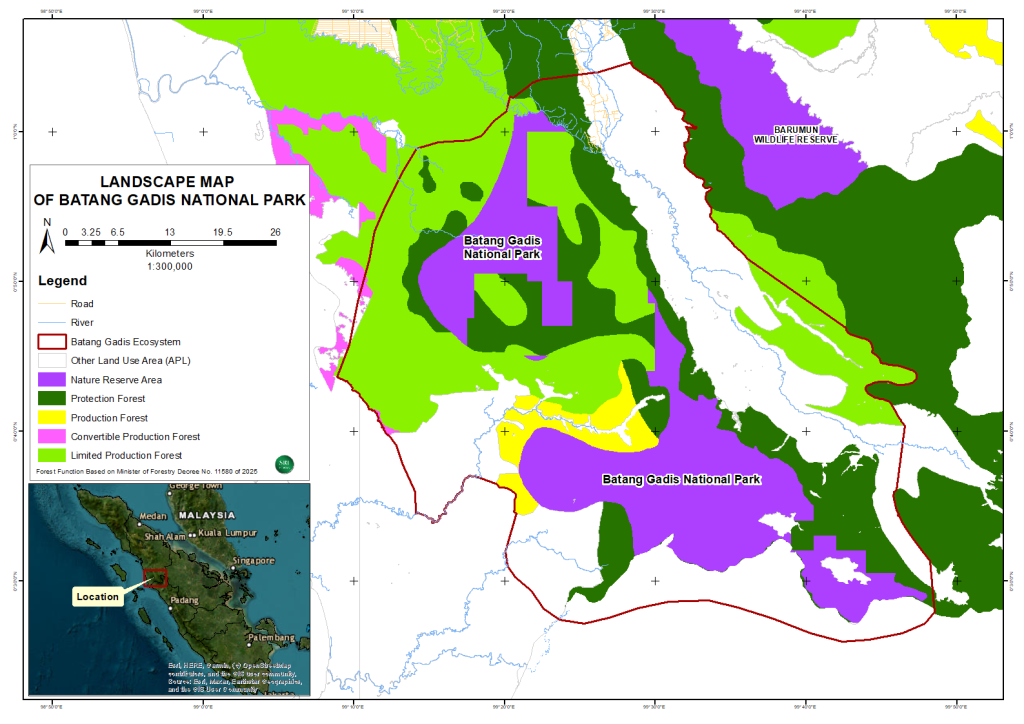
The Batang Gadis National Park (TNBG), located in Mandailing Natal Regency, North Sumatra Province, is one of the most important conservation areas on the island of Sumatra. Spanning over 100,000 hectares, the landscape of this area is dominated by a topography ranging from rolling hills to rugged mountains that form part of the Bukit Barisan range. The national park takes its name from the Batang Gadis River, which flows through the region and serves as the lifeblood for surrounding communities. Its remarkably pristine landscape makes it a crucial ecological bulwark for the upper watershed areas in North Sumatra.
The socioeconomic conditions of the communities surrounding TNBG rely heavily on agriculture, plantations, and non-timber forest products. Most local residents work as paddy farmers, rubber planters, and cultivators of Mandailing coffee, which has gained international renown. The relationship between the community and the forests around TNBG has been forged across generations, with local wisdom playing a vital role in regulating the wise use of natural resources for their daily survival.
The biodiversity in Batang Gadis National Park is exceptionally high, making it one of the world’s important ecoregional centers. The area serves as a natural habitat for various species of rare flora and fauna protected by law. The tropical rainforests in TNBG harbor extraordinary botanical wealth, ranging from various forest orchids and high-canopy trees to traditional medicinal plants that thrive from the low mountain zones to sub-alpine areas.
From the faunal group, TNBG is an essential home for endangered large mammals such as the Sumatran Tiger, Asian Tapir, Serow, and Sun Bear. The presence of these umbrella species is a primary indicator that the ecosystem within the national park remains functional and balanced. Aside from large mammals, the area is also a paradise for researchers and birdwatchers due to its wealth of endemic avifaunal species, as well as various types of reptiles, amphibians, and insects that enrich the ecosystem’s food chain.
The hydrological potential possessed by the TNBG landscape is equally vital for regional life. This mountainous forest area functions as a giant water tower that continuously absorbs, stores, and distributes clean water to various large and small rivers surrounding it. The water flow from TNBG not only fulfills clean water needs for local households but also serves as the primary irrigation source for thousands of hectares of rice fields in Mandailing Natal Regency.
Despite its extraordinary natural wealth, this conservation area faces quite complex conservation challenges. One of the main recurring threats is forest encroachment for land conversion into illegal plantations, alongside illegal logging. Economic pressures faced by some community members frequently trigger the exploitation of forest resources in the buffer zone, which can gradually damage the integrity of the national park’s core ecosystem if not addressed seriously.
Beyond threats from human activities, poaching targeting protected wildlife such as the Sumatran Tiger and other game animals remains a significant menace to biodiversity preservation. This poaching is generally economically motivated to trade animal parts illegally on the black market. Consequently, this demands an increase in the intensity of forest security patrols and firm law enforcement against environmental criminals within and around the TNBG area.
To address these various challenges, the management of Batang Gadis National Park increasingly prioritizes a collaborative approach through the active engagement of local communities. Social forestry programs, ecotourism-based community economic empowerment, and continuous conservation education continue to be promoted. Through synergy between the national park management authority, local government, and the community, it is hoped that the preservation of the TNBG landscape will be maintained while providing economic prosperity for local residents without damaging its ecological functions.
In efforts to address existing conservation challenges, the *Sumatra Rainforest Institute (SRI)* plays a strategic role through the implementation of tangible programs on the ground. The organization actively carries out forest vegetation rehabilitation within the national park area and develops agroforestry coffee cultivation on community agricultural land in the buffer zone. Additionally, SRI initiates natural conservation awareness education campaigns, the development of farmer cooperatives to strengthen the local economy, independent and collaborative forest and wildlife patrol operations, and the management and mitigation of human-wildlife conflicts to ensure harmony in the surrounding area is preserved.