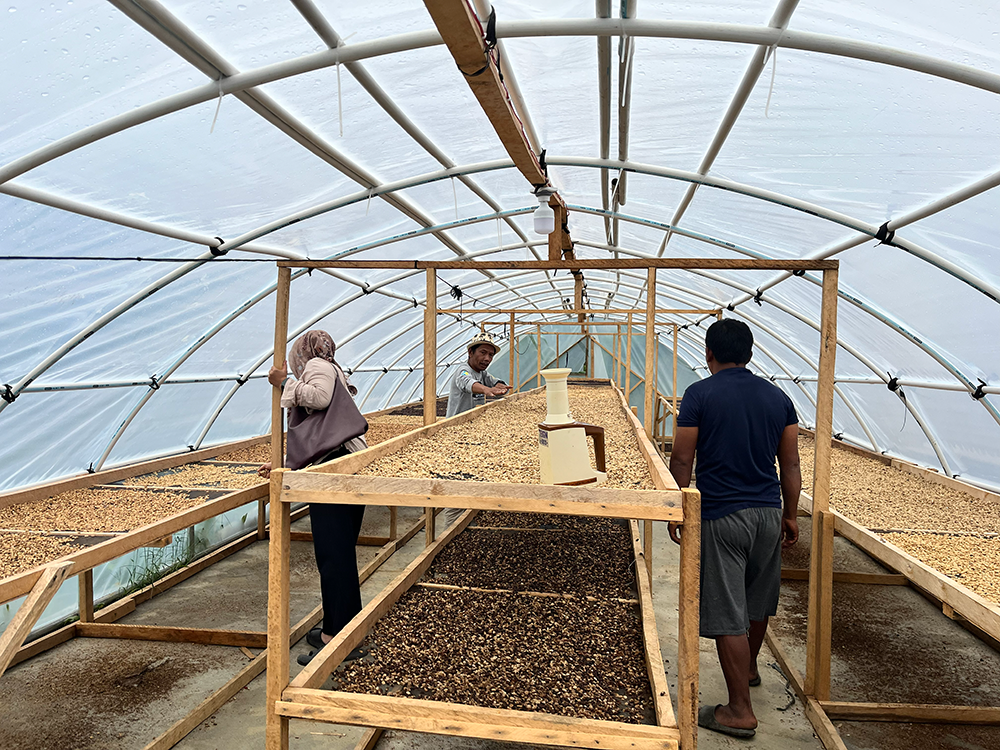
Scaling up Collaborative Conservation of Batang Toru Landscape (Phase I) & Advancing Collaborative Protection of Tapanuli Orangutans and the Batang Toru Ecosystem (Phase II)
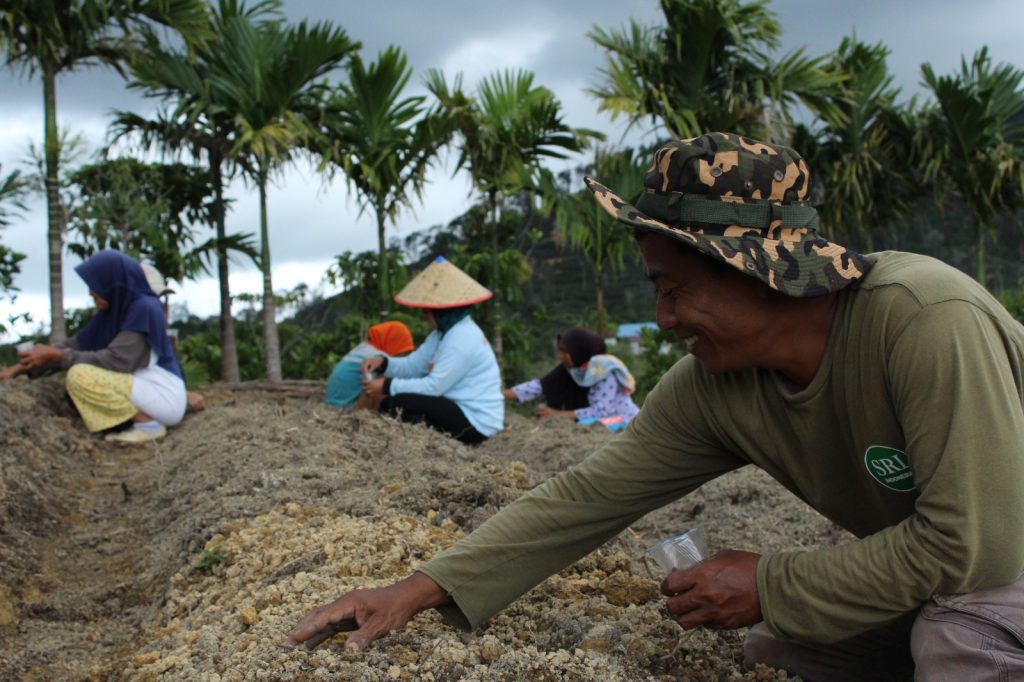
Project Location: Desa Marsada (Dusun Aek Latong) and Desa Pahae Aek Sagala.
Funding Partner: Pan Eco (Batangtoru Alliance)
Implementing Partners: : Local Conservation and Community Development Partners
Reporting Period: 2025 – October 2026
Activity Focus: Coffee-based agroforestry system development, degraded land rehabilitation, community economic institution building, and market access reinforcement
Executive Summary :
This report provides an integrated performance overview of the collaborative conservation initiatives in the Batang Toru landscape, bridging Phase I (2023–2025) and Phase II (2026–2028). Phase I successfully laid the foundation for ecosystem restoration and sustainable rural livelihoods through extensive coffee-based agroforestry development, degraded land rehabilitation, and structured farmer capacity building. Building upon these ecological foundations, Phase II (2026–2028) marks a strategic shift toward institutional consolidation, economic empowerment, and market integration via the establishment and capacity building of local economic institutions such as Koperasi Hurokah
Key Performance Achievements :
Agroforestry Development (Phase I): Developed ±50 hectares across 2 farmer groups consisting of 50 members, planting 39,000 coffee seedlings and 13,600 Multi-Purpose Tree Species (MPTS) seedlings
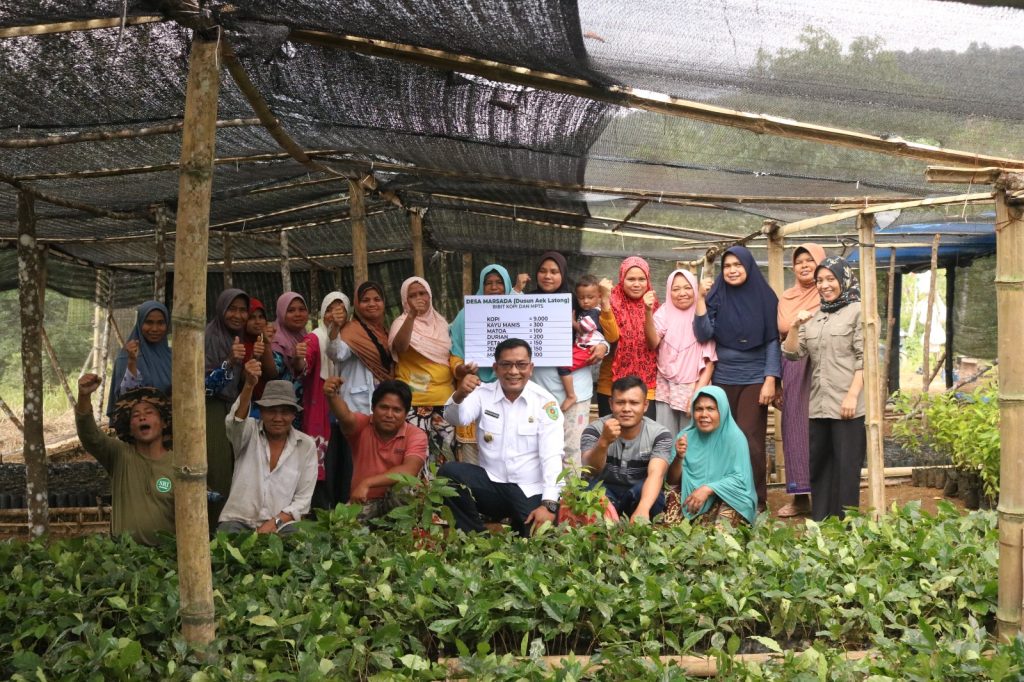
Land Rehabilitation & Enrichment: Covered 20 hectares with 7,000 MPTS seedlings and 3,000 Non-MPTS (timber) seedlings. Monitoring recorded 8,203 trees successfully growing with a high survival rate of 82.03%.
Institutional Development (Phase II): Formed *Koperasi Hurokah* (Hurokah Cooperative) involving 65 active members, focusing on coffee trading and Non-Timber Forest Products (NTFPs / HHBK) to increase product added value and market access.
Capacity Building:
– Implemented core farmer training modules in soil fertility management, crop maintenance (pruning and eco-friendly IPM), and selective red-cherry harvesting/post-harvest handling.
– Delivered targeted cooperative training modules covering institutional governance, business development, and marketing strategies.
Field Findings:
– Agroforestry plots established in Phase I demonstrate resilient growth, validated by an 82.03% tree survival rate in rehabilitation zones.
– Communities in Desa Marsada and Desa Pahae Aek Sagala show strong commitment toward shifting from individual farming efforts to formalized institutional cooperation through Koperasi Hurokah.
– Increasing demand for structured market linkages highlights the necessity of Phase II’s core business focus on coffee processing and NTFP value addition.
CHALLENGES AND CONSTRAINTS:
– Balancing ecological protection requirements with immediate rural economic pressures in the Batang Toru buffer zones
– Managing the transition phase from initial farmer group capacity building to formal cooperative enterprise governance and sustained market integration.
Next Steps (2026–2028 Work Plan)
Year 2026: Focus on cooperative business development encompassing the production, processing, and marketing of coffee products, alongside strengthening institutional governance of Koperasi Hurokah
Year 2027: Execute maintenance of agroforestry gardens and rehabilitation zones, implement replanting/infill planting (penyisipan tanaman), ensure continuous plant care, and conduct rigorous growth monitoring.
Year 2028: Carry out a final project evaluation to measure overall project outcomes, direct impacts on communities and the Tapanuli ecosystem, and long-term effectiveness, followed by strategic recommendations to ensure the sustained success of landscape conservation.