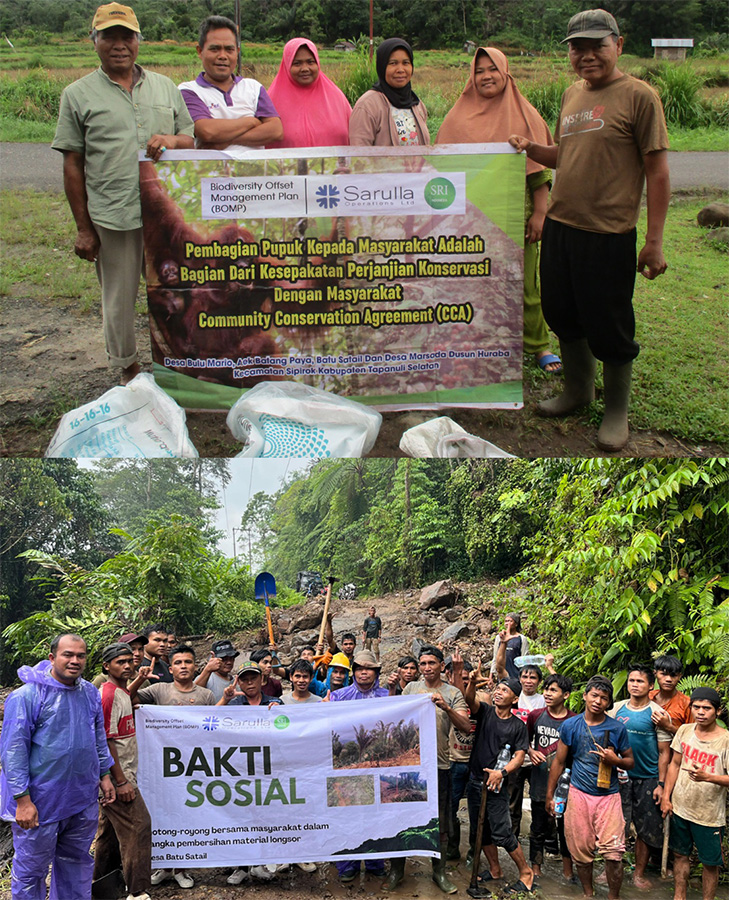
Wildlife Corridor Conservation of Sibualbuali Nature Reserve – Batang Toru Forest (Biodiversity Offset Management Plan/BOMP)
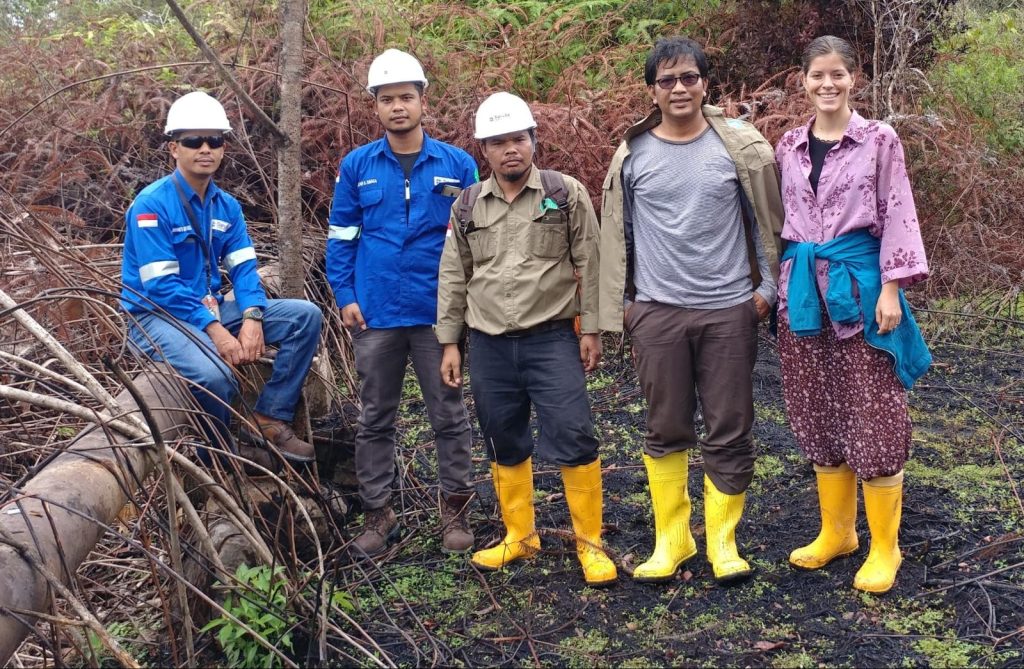
Project Location: Bulumario Village, Aek Batangpaya Village, Batusatail Village, and Marsada Village, Siprok Sub District, South Tapanuli Regency
Reporting Period 2024–2026: Activities continue until April 2027 (Phase 3)
Activity Focus:
– Watershed (DAS) rehabilitation and wildlife corridor restoration
– Community economic enhancement through a coffee-based agroforestry system
– Forest protection and routine patrols through the involvement of local communities, BBKSDA, and South Tapanuli DLH
– Education, capacity-building training, and environmental awareness campaigns for village youth and educational institutions
– Threat mitigation against key species and maintenance of habitat connectivity through the installation of canopy bridges
Executive Summary:
The ecosystem corridor strengthening program between the Sibualbuali Nature Reserve and the Batang Toru Forest landscape integrates Watershed (DAS) restoration, community economic enhancement through coffee-based agroforestry, and threat mitigation for key species.
During the 2024–2026 period, 44,365 trees were planted along riverbanks and community lands to support the recovery of watershed functions, alongside 153,620 coffee plants on community lands as a sustainable livelihood source, with total production to date reaching 85,542.5 kg.
The corridor assessment covered 318.72 hectares, but considering activity implementation based on Major and Medium disturbance levels, enrichment planting was carried out across 136 hectares of disturbed land and was 100 percent completed in 2024. In 2025–2026, SRI focused its maintenance activities on an area of 81.50 hectares of priority zones, and assessments revealed an average plant survival rate reaching 93.2%.
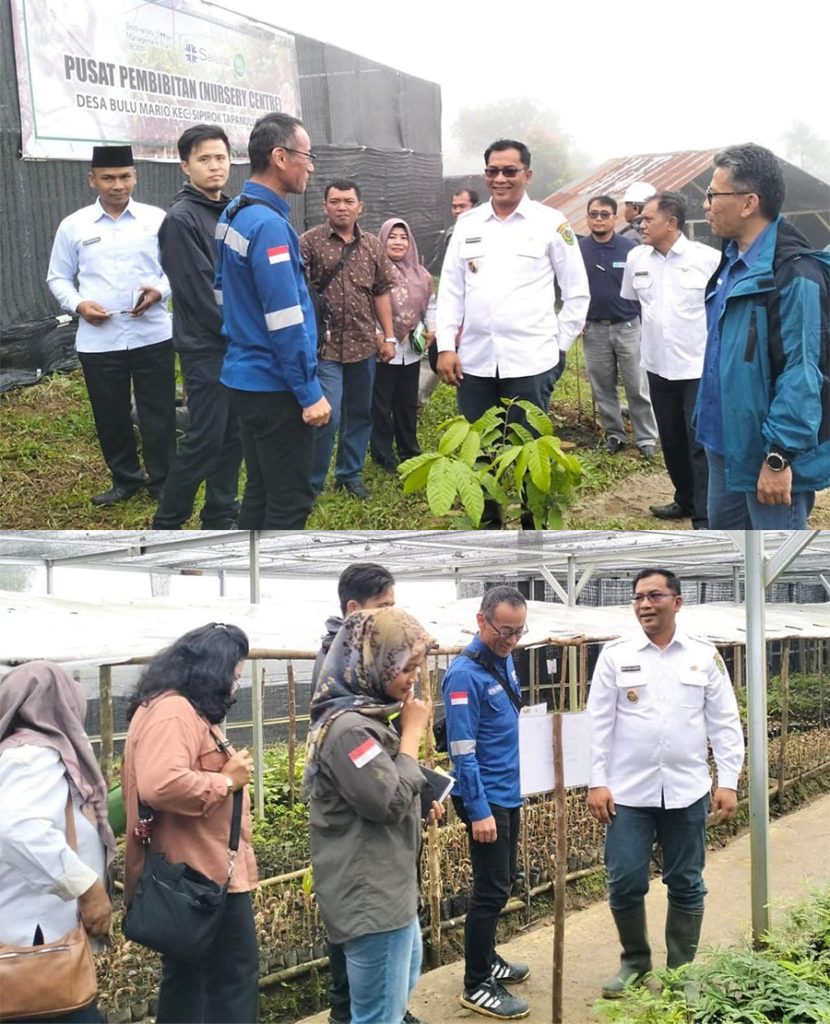
Key Performance Achievements :
Tree Planting (Watershed & Community Land): Covered 136 hectares with 44,365 trees planted; 100 percent complete. Target for 2025–2026 focused on maintenance activities across 81.50 hectares, achieving an average plant survival rate of 93.2%.
Coffee Planting (Agroforestry) & Production: 153,620 coffee plants implemented 100 percent, with a Total Coffee Production (2024–2026) of 85,542.5 kg.
Training and Campaigns: Farmer Training (Phase I & II): 600 people.
Village Youth Campaign: 120 people (Bulu Mario, Aek Batangpaya, Batusatail, Marsada).
School Outreach: 450 students (SDN Bulu Mario, SDN Aek Batangpaya, SDN Batusatail, SMPN 1 Sipirok, SMAN 1 Sipirok, Ponpes KH. Ahmad Dahlan), achieving 100 percent implementation.
Canopy Bridge Installation: Planned for two installation points, but currently only 1 point is installed. From this 1 bridge, Arboreal Animal Crossing Frequency Increased from 0.3 to 5.3 times per month (2025–2026). Currently studying suitable locations to install a second canopy bridge to meet the planned target.
Field Findings:
Forest Protection Community Patrol implementation runs routinely with the active participation of local communities and government bodies, namely BKSDA and the South Tapanuli Environmental Service (Dinas Lingkungan Hidup).
The survival rate of restoration plants in priority areas shows good results, averaging 93.2%.
The utilization of the canopy bridge by arboreal animals shows a significant increase (from 0.3 to 5.3 crossings per month) with the identification of two crossing primate species, namely Presbytis melalophos and Macaca sp.
Farmer training has progressed through three phases (basic capacity, field implementation, and intensive individual mentoring), with Phase III still ongoing to encourage improved coffee quality and market access.
Challenges and Constraints:
Agroforestry Farmer Training Activities*: No specific challenges or field constraints, though efforts are focused on continuing intensive farmer mentoring.
Plant Maintenance in Enrichment Locations*: Affected by the interests of PHAT Anggara Fatur Rahman covering 7 hectares where maintenance is not permitted within the 81.50-hectare priority area.
However, engagement efforts are ongoing, with the expectation that the priority area can be properly maintained according to standards in the future.
Next Steps:
Continue and finalize Phase III Training (individual intensive mentoring for farmers regarding coffee quality improvement and market access).
Focus activities on routine maintenance across the 81.50 hectares of restoration priority areas, and engage with communities affected by PHAT interests.
Consistently maintain the effectiveness of Forest Protection Community Patrols to mitigate threats to the corridor area and key species.
Maintain collaboration with local governments and BKSDA as field partners.
Monitor habitat connectivity effectiveness through the use of canopy bridges and install one more canopy bridge at the location currently undergoing assessment.